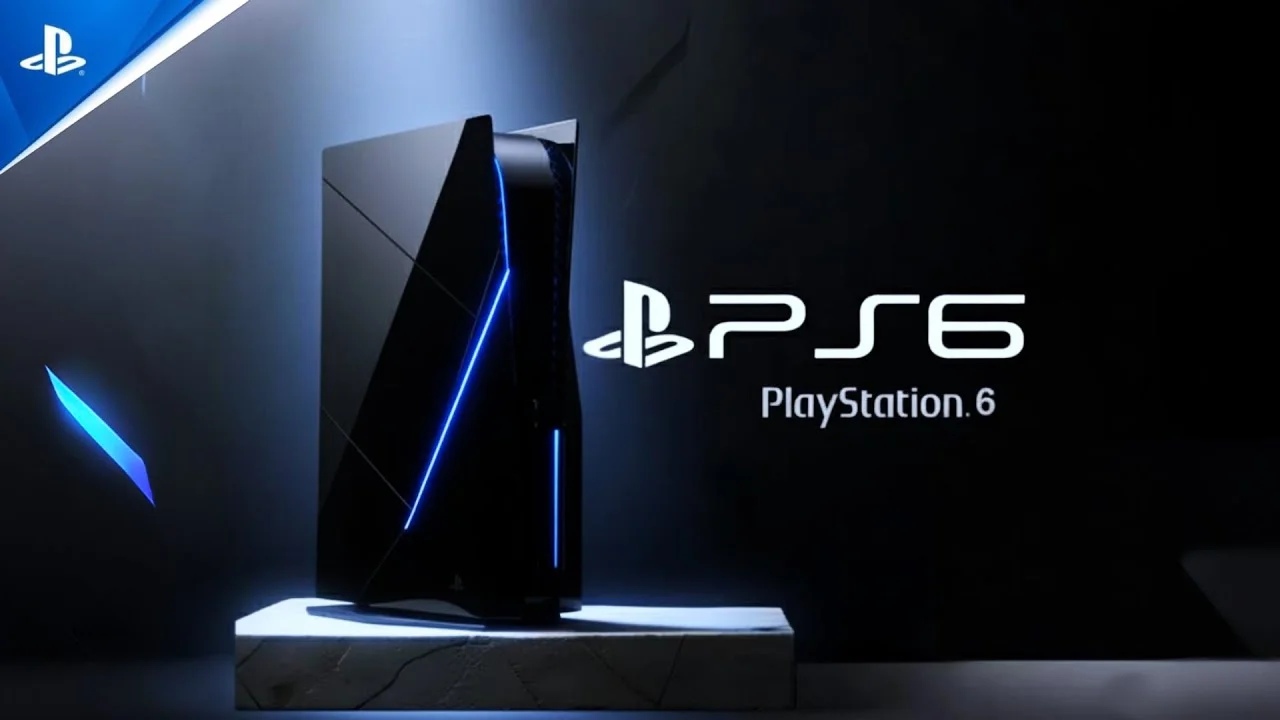
I’ll be honest with you—when I first heard that OpenAI might be responsible for delaying the PlayStation 6, I thought someone was pulling my leg. How could a chatbot company possibly mess with my console gaming future? But here we are in late December 2025, watching RAM prices triple overnight while AI companies vacuum up nearly half the world’s memory supply. The PS6 delay isn’t just a rumor anymore; it’s becoming an increasingly likely reality.
The situation has escalated faster than anyone anticipated. What started as whispers about component shortages has snowballed into what insiders are calling the worst memory crisis since the early 2000s. Console manufacturers like Sony and Microsoft are reportedly scrambling to figure out whether to push forward with their planned 2027-2028 next-gen console launches or wait for the chaos to settle. And honestly? Many PlayStation fans are surprisingly okay with that idea.
 ‘Clair Obscur’ Just Lost Its Game of the Year Award, And I Am So Sick Of This Exhausting AI Witch Hunt
 Table of Contents
Key Takeaways:
- The PS6 delay is being seriously considered due to a global RAM shortage driven by AI industry demand
- OpenAI’s Stargate project has secured contracts for up to 40% of global DRAM supply through Samsung and SK Hynix
- DDR5 memory prices have surged by 150-300% since September 2025
- Micron is exiting the consumer memory market entirely by February 2026
- The original PS6 release date window of 2027-2028 may shift to 2028-2029 or later
The AI RAM Shortage Hitting Console Gaming: What’s Actually Happening
Picture this: you’re a memory chip manufacturer, and suddenly two types of customers walk through your door. One is a consumer electronics company that wants to buy chips for gaming consoles and smartphones. The other is an AI company willing to pay whatever it takes for an absolutely massive quantity of memory—and they’re signing multi-year contracts worth billions. Which customer gets priority?
That’s essentially what happened in October 2025 when OpenAI struck simultaneous deals with Samsung and SK Hynix for their Stargate data center project. We’re talking about agreements covering up to 900,000 DRAM wafers per month. To put that in perspective, global DRAM production capacity sits around 2.25 million wafer starts monthly. OpenAI’s contracts could represent roughly 40% of total worldwide output.
The fallout has been immediate and brutal. DDR5 memory that cost around $90 for a 32GB kit back in July? You’re now looking at $400 or more—if you can even find it in stock. Some retailers have stopped listing prices entirely, switching to “call for quote” because values are changing daily. I’ve watched the same Corsair Vengeance kit I bought last year more than quadruple in price since September.
Industry analyst TrendForce reported that DDR5 chip spot prices jumped 307% between September and November 2025. That’s not a typo. And with companies like Micron announcing they’re abandoning the consumer market entirely to focus on enterprise AI customers, the supply situation is only getting tighter. If you’re wondering how to optimize your current gaming setup while waiting for next-gen, you’re definitely not alone.
 Breaking: Hollow Knight: Silksong Sweeps The 2025 Steam Awards While Kingdom Come And Gets Dumped
 Why the PS6 Delay Makes Sense for Sony Right Now
Let’s break down why Sony might actually choose to postpone the PlayStation 6 rather than push forward with their original timeline. According to Insider Gaming’s Tom Henderson, console manufacturers are actively debating whether to delay their next-gen platforms from the intended 2027-2028 window.
The math just doesn’t work otherwise. Consoles have historically been sold at slim margins or even losses, with companies making their money back through game sales and subscriptions. But when your key component costs triple overnight, that subsidy model falls apart. Sony and Microsoft face an ugly choice: either delay the PS6 and next-gen Xbox, or launch at prices that could make the $700 PS5 Pro look like a bargain.
There’s also the manufacturing timeline to consider. Tech insider Moore’s Law Is Dead claims to have seen documents showing Sony planned to begin PS6 manufacturing in mid-2027 for a potential holiday launch that same year. But with RAM shortages expected to persist through at least 2026, hitting that window seems increasingly unrealistic. As Moore’s Law Is Dead noted, “Short term, everyone is doing everything they can, and there is just going to be a shortage in 2026.”
The PS6 delay conversation isn’t happening in a vacuum either. Video game hardware sales hit a 30-year low in November 2025, even with the Switch 2 flying off shelves. If console makers hike prices further to offset component costs, they risk tanking demand even more. Waiting for the market to stabilize might be the smarter long-term play.
 Rumor: Ubisoft Just Lost 900GB of Data in Massive ‘MongoBleed’ Hack
 PS6 Release Date Delay: The New Timeline Scenarios
So when might we actually see the PlayStation 6 hit stores? The original rumors pointed to a late 2027 launch, following Sony’s traditional seven-year console cycle from the PS5’s 2020 debut. Leaker KeplerL2 was adamant back in October that 2027 was “the plan” and not just a potential window. But that was before the RAM crisis reached its current fever pitch.
Looking at the various PS6 leaks and industry analysis, here are the scenarios we’re now facing:
Optimistic Scenario: Late 2028
If memory prices begin stabilizing by mid-2026 as some manufacturers are expanding production capacity, Sony could still hit a late 2028 launch. This aligns with former PlayStation executive Shuhei Yoshida’s comments that 2028 “feels right” for the next PlayStation, though he clarified he doesn’t have insider knowledge about current plans.
Realistic Scenario: 2029
Multiple sources now suggest 2029 as a more probable window. This gives time for the RAM market to normalize, new manufacturing facilities to come online, and allows the PS5 Pro to serve as a bridge device. Sony CFO Lin Tao recently stated the PS5 is only “in the middle of the journey,” hinting at an extended current-gen lifecycle.
Worst Case: 2030 and Beyond
If AI demand continues accelerating and no new memory suppliers emerge, we could be looking at an even longer wait. Some industry observers are now talking about the PS5 generation potentially stretching past the decade mark, though this seems like an extreme scenario.
Here’s the thing that’s kept me somewhat optimistic: Sony apparently had the foresight to stockpile components for the PS5, keeping that console’s price stable through the current crisis. If they’re applying similar strategic thinking to PS6 planning, they might be better positioned than we fear.
 ARC Raiders Players Are Already “Time Traveling” to the Next Wipe
 How OpenAI and the AI Industry Created This Console Delay Crisis
I need to walk you through exactly how we got here, because understanding the scope of AI’s appetite for memory helps explain why this isn’t a short-term blip. OpenAI’s Stargate project represents one of the most ambitious infrastructure buildouts in tech history—a $500 billion initiative to construct massive AI data centers globally.
When Samsung and SK Hynix signed those October 2025 agreements, they essentially committed to prioritizing AI over everyone else. These aren’t standard purchase orders either. OpenAI is buying raw DRAM wafers—the undiced silicon before it becomes actual memory chips—giving them first position in the production queue. The contracts were reportedly finalized during high-level meetings in Seoul involving Sam Altman, South Korea’s president, and the chairmen of Samsung and SK Group.
But OpenAI isn’t the only player sucking up memory capacity. The entire AI industry has shifted into overdrive. Every major tech company is racing to secure GPU computing power, and those GPUs need enormous amounts of high-bandwidth memory. A single AI server might require up to 1TB of memory, compared to 32-128GB in a standard server. Nvidia has essentially become a memory customer with the purchasing power of a major smartphone manufacturer.
Making things worse, Micron announced they’re completely exiting the consumer memory market by February 2026. Their Crucial brand, which had been a reliable affordable option for PC builders for 29 years, is being discontinued so the company can redirect all resources to enterprise AI customers. When a major manufacturer straight-up abandons consumers because AI pays better, you know the next-gen console delay is about more than a temporary shortage.
 Pokémon GO New Year’s 2026 Event: Your Complete Guide to Maximizing Rewards
 PS6 Cost and Pricing: What the Delay Means for Your Wallet
Let’s talk money, because the PS6 price discussion has gotten a lot more complicated. Before the RAM crisis, most analysts predicted the PlayStation 6 would launch around $600—expensive, but in line with traditional console pricing when adjusted for inflation. Moore’s Law Is Dead estimated a range of $500-$700, with $600 being the most likely target.
That calculus has changed dramatically. With memory costs potentially remaining elevated through 2027 and beyond, Sony faces several unpalatable options:
Absorb the Costs: Sony could eat the increased component expenses and subsidize the PS6 heavily, betting on game sales and PlayStation Plus subscriptions to recover losses. But with RAM costs potentially adding hundreds of dollars per unit, that’s a massive financial risk.
Raise the Launch Price: Some industry observers now suggest the PS6 could launch anywhere from $700 to $900 depending on when it releases and what memory prices look like at that point. Remember, the PS5 Pro already tested the waters at $700, and Sony defended that pricing aggressively.
Reduce Specs: Sony could theoretically cut corners on memory capacity to keep costs down. Current PS6 leaks suggest the console may pack around 24-32GB of RAM—some fans are worried Sony might settle for less to maintain affordability. That’s a trade-off that could hurt the console’s longevity and performance.
Interestingly, leaker KeplerL2 suggested the PS6 might cost half as much as Microsoft’s next-gen Xbox, predicting “$600 vs. $1,200.” If accurate, that would position Sony as the affordable next-gen option, which could be a smart strategic move if RAM prices force Microsoft to go ultra-premium.
 Red Dead Redemption “Switch 2 Vs. Xbox Ally Vs. Steam Deck Vs. Smartphone” comparison (2026)
 PlayStation Fans Are Surprisingly Okay with the PS6 Delay
Here’s what’s caught me off guard about this whole situation: scroll through PlayStation forums and subreddits, and you’ll find a surprising amount of support for delaying the PS6. I expected rage and frustration, but the community reaction has been remarkably measured.
“Delaying PS6 would be a VERY WISE choice considering this generation has barely got going,” wrote one commenter on Push Square. Others pointed out that their backlogs are massive, the PS5 Pro just launched, and first-party exclusives are only now hitting their stride. Some fans are actively hoping for a longer PS5 generation.
The sentiment makes sense when you think about it. How many PS5 exclusives truly pushed the hardware to its limits? We’re still waiting for major releases like Grand Theft Auto 6. Games take longer to develop than ever before, and jumping to a new generation too quickly means fewer titles that actually leverage each console’s full potential.
“I’m totally fine with it, it’s better this way,” one PS5 Pro owner commented. “Just keep subsidizing the console and build it in the best way possible and we’re good.” The common thread is that players would rather wait for a properly specced, reasonably priced PS6 than rush into an overpriced or compromised next-gen experience.
That said, not everyone’s patient. Gamers who skipped the PS5 Pro expecting the PS6 in 2027 might feel burned by extended delays. And developers potentially targeting PS6-level hardware for upcoming games could face awkward decisions about whether to scale back or delay their own projects. The ripple effects of a next-gen console delay touch everyone in the industry.
 Valve’s “Lepton” Leak Just Saved The Steam Frame From Being A Paperweight
 What Gamers Should Do While Waiting for the PS6
Assuming we’re looking at a 2028 or 2029 PS6 launch, what’s the smart play for PlayStation fans right now? I’ve been thinking about this a lot, and here’s my honest advice:
Don’t Panic About Current Hardware: Your PS5 is going to be supported for years to come. Even after the PS6 launches, Sony historically continues making games for the previous generation. If you haven’t upgraded to a PS5 Pro, that decision makes even more sense now—you’ll likely get 4-5 years of use out of it before the PS6 becomes essential.
Consider Your Backlog: I know it sounds cliché, but this is actually the perfect time to work through games you’ve missed. The PS5 library is stacked with excellent titles, and Game Pass, PS Plus, and regular sales mean there’s always something new to play. Mastering complex games like those featured in automation and strategy titles can provide hundreds of hours of entertainment.
Avoid Impulse Memory Purchases: If you’re a PC gamer thinking about upgrading RAM right now—don’t. Prices are at crisis levels and expected to climb further before eventually stabilizing. Unless your system is completely unusable, wait for the market to normalize. Industry experts suggest mid-to-late 2026 at the earliest for meaningful improvement.
Watch for PS5 Console Deals: Sony managed to maintain PS5 pricing stability through stockpiled components, and we saw holiday discounts in 2025. If you don’t own a current-gen console yet, there may still be opportunities to buy at reasonable prices before any potential increases.
 Japanese Game Devs Pick 2025 GOTY: The Results Will Surprise You
 How the RAM Shortage Affects Other Next-Gen Consoles
The PS6 delay discussion inevitably brings up questions about other upcoming gaming hardware. Sony isn’t the only company navigating this memory minefield.
Next-Gen Xbox: Microsoft faces identical challenges, and some reports suggest they’re in an even tougher position. Unlike Sony, Microsoft was reportedly caught off guard by the RAM shortage’s severity. Rumors indicate the next Xbox might cost around $1,000-$1,200 as Microsoft aims for ultra-premium specs, though such pricing would be historically unprecedented for a mainstream console.
Steam Machine: Valve’s planned Q1 2026 gaming PC launch is directly threatened by current memory prices. Moore’s Law Is Dead suggested Valve might offer a barebones configuration without memory and storage, forcing buyers to complete builds themselves. For a console-like device, that’s a significant compromise that could hurt mainstream appeal.
Nintendo’s Next Move: The Switch 2 launched successfully, but future Nintendo hardware planning likely accounts for the same memory constraints. Nintendo’s historically lower-spec approach might actually prove advantageous here—their consoles typically require less memory than PlayStation or Xbox competitors.
The takeaway is that no one escapes this crisis unscathed. When component shortages hit this hard, the entire industry adjusts. Game developers calibrate their projects to existing hardware, console makers reconsider timelines, and players adjust expectations accordingly.
 Assassin’s Creed Black Flag: Pirate Legacy and Remake Rumors Explode
 When Will the RAM Crisis End and PS6 Launch Be Safe?
This is the million-dollar question everyone’s asking. Based on my research and industry analysis, here’s what the timeline looks like:
2026: Don’t expect relief. Micron’s CEO confirmed memory shortages will persist “beyond calendar 2026.” New manufacturing facilities announced by Samsung and SK Hynix won’t be operational until late 2027 at the earliest. AI companies have contracts locked in through this period.
2027: We might start seeing improvement as production capacity expands and some AI contracts complete their initial terms. However, industry sources suggest tight conditions will continue, especially if AI demand keeps accelerating. PS6 manufacturing could theoretically begin in this window, but launch seems unlikely.
2028-2029: This is when conditions should meaningfully improve. New fabs coming online, potential market stabilization, and the completion of major AI infrastructure projects could finally create breathing room for consumer electronics. This window aligns with the more conservative PS6 launch estimates.
The wild card is AI industry growth. If companies like OpenAI, Google, and Microsoft continue expanding data center capacity at current rates, even new production might not be enough. The AI boom shows no signs of slowing, and these companies have the cash to keep outbidding consumer electronics manufacturers indefinitely.
Some analysts point to historical memory cycles as a reason for optimism—periods of shortage eventually lead to oversupply. But the counterargument is that this cycle is different. AI represents a fundamental shift in demand patterns, not a temporary spike. The industry may need to structurally adjust rather than wait for normal cycles to play out.
 Leak: PlayStation Starts 2026’s PS Plus Essential Games with NFS Unbound, Epic Mickey, and Core Keeper
 PS6 Leaks: What We Know About PlayStation 6 Hardware
While we’re discussing delays, it’s worth reviewing what the PS6 might look like when it does eventually arrive. Multiple leaks have painted a picture of Sony’s next-gen ambitions, though RAM shortages could force changes.
According to leaked documents and insider reports, the PS6 is expected to feature AMD’s Zen 6 CPU architecture paired with an RDNA 5-based GPU. Performance targets suggest roughly triple the rasterization power of the base PS5, with significantly enhanced ray tracing capabilities. Native 4K at 120fps and potential 8K output at 60fps are reportedly in the cards.
Memory configurations are particularly relevant given the current crisis. Early PS6 leaks suggested 24-32GB of RAM would be standard, providing substantial headroom for next-gen games. Some sources indicate the console might use next-generation memory technologies like GDDR7, though availability of such components during a shortage adds another layer of uncertainty.
Sony’s partnership with AMD remains rock solid, which is good news for backward compatibility. Playing your existing PS4 and PS5 library on PS6 seems virtually guaranteed, continuing a strategy that’s worked well for Sony this generation. If you’ve invested heavily in games with extensive content, that investment should carry forward.
Perhaps most intriguingly, persistent rumors suggest Sony is developing two systems on a chip for the PS6 generation—potentially indicating a console and handheld combo. This “Project Canis” handheld reportedly targets PS5-level performance in a portable form factor, which would be a significant addition to Sony’s hardware lineup.
 Nvidia Is Capping GeForce Now Playtime at 100 Hours a Month—And Your Wallet Will Feel It
 The Bottom Line on PS6 Delay Rumors
Look, I’m not going to sugarcoat this: the PS6 delay situation is real, it’s serious, and it’s probably going to push Sony’s next console launch past what most of us expected. The combination of AI industry demand, manufacturing constraints, and market uncertainty creates conditions we haven’t seen in the gaming industry before.
But there’s a silver lining here. Sony has time to optimize, perfect, and properly prepare the PlayStation 6 for launch. A delayed console that launches with great software, reasonable pricing, and proper stock beats a rushed release that repeats the PS5’s painful availability problems. The PS5 generation had to deal with a pandemic, semiconductor shortages, and economic turbulence—let’s hope the PS6 gets a smoother start.
For now, my recommendation is simple: enjoy what you have, keep an eye on official announcements rather than speculation spirals, and don’t make any hardware decisions based on rumors. Sony hasn’t officially confirmed any delays, and the company has historically been strategic about managing component challenges. They navigated the PS5 era; they’ll navigate this too.
I’ll keep tracking this story as it develops. The memory market is volatile, new developments emerge weekly, and Sony could announce something that changes the calculus entirely. But if I’m being realistic with you—and that’s what MyWinterCarWiki is all about—mentally prepare for 2028 or 2029. Your backlog will thank you.
 New ‘Marathon’ Leaks Prove Bungie’s Art Team Is Still Incredible, Even If The Studio Is In Trouble
 Frequently Asked Questions About PS6 Delay
Is there actually a PS6 coming out?
Yes, the PlayStation 6 is confirmed to be in development. Sony architect Mark Cerny has publicly discussed working on next-generation console hardware in partnership with AMD. While Sony hasn’t made an official announcement with specific details, multiple credible sources indicate that PS6 development is well underway, with manufacturing potentially starting in mid-2027. The console is expected to be a significant upgrade from the PS5, featuring AMD’s Zen 6 CPU architecture and RDNA 5 GPU technology.
Does PS6 have a release date?
Sony hasn’t announced an official PS6 release date. Industry leaks and insider reports had previously pointed to a late 2027 or early 2028 launch window, following the traditional seven-year console generation cycle. However, the ongoing RAM shortage caused by AI industry demand has led to speculation that console manufacturers are debating whether to delay this timeline until memory prices stabilize. Current estimates from industry analysts suggest 2028-2029 is becoming more realistic.
Will the PS6 come in 2025?
No, the PS6 will definitely not release in 2025. The earliest realistic launch window is late 2027, with 2028 or even 2029 becoming more likely given current RAM shortages. Sony CFO Lin Tao recently indicated that the PS5 is only midway through its lifecycle, suggesting the company isn’t rushing to launch a successor. The PS5 Pro, released in 2024, is designed to extend the current generation while Sony prepares for next-gen.
Will the PS6 be $600?
Price predictions for the PS6 range from $500 to $700, with $600 being the most commonly cited estimate from industry analysts before the RAM crisis. Tech insider Moore’s Law Is Dead suggests Sony is targeting this price point to remain competitive. However, the current memory shortage could impact final pricing, with some analysts suggesting prices between $700 and $900 if component costs remain elevated at launch. The PS5 Pro’s $700 price tag tested consumer tolerance for premium console pricing, which may influence Sony’s PS6 strategy.
 Sony Faces Unpatchable PS5 Jailbreak Threat After PS5 BootROM Keys Leaked