
Here’s something that doesn’t happen every day—you get to peek inside the actual gaming habits of the legends who make your favorite games. Forget the corporate awards shows with their predictable winners and flashy presentations. Famitsu’s annual survey asks 191 Japanese developers and industry celebrities what they actually played in 2025, and the results are genuinely fascinating.
 Shroud Predicts ARC Raiders Will Be ‘Bigger Than Fortnite’
 This year’s survey reveals some interesting patterns about what resonates with the people who understand game design at its core. While Clair Obscur: Expedition 33 took the top spot (shocking absolutely no one who’s been paying attention to its award sweep), it’s the deeper cuts and unexpected choices that tell the real story about where gaming is heading.
 Nintendo Download for 1st January, 2026: Happy New Year!
 Table of Contents
What Makes This Survey Different From Every Other GOTY List
The thing about Famitsu’s annual poll is that it strips away all the noise. These aren’t game critics trying to sound clever or influencers chasing engagement. These are developers—people who spent 12-hour shifts making their own games—choosing what they played during their precious downtime.
That context matters. When Kazuhisa Wada from Persona Studio ranks a pixel-art mystery game as his number one, he’s not doing it for clicks. When Street Fighter 6 director Takayuki Nakayama picks the same indie title, you know something special is happening. And when Hideki Kamiya votes for Tetris 99 (yes, really), it’s peak Kamiya and we wouldn’t have it any other way.
For 11 years now, Famitsu has been running this survey, and previous winners tell you everything you need to know about its legitimacy: Marvel’s Spider-Man, Death Stranding, Elden Ring, and The Legend of Zelda: Tears of the Kingdom. These weren’t just commercial successes—they were games that pushed boundaries and resonated with the people who make games for a living.
 Valve’s “Lepton” Leak Just Saved The Steam Frame From Being A Paperweight
 The Official Top 5: Japanese Game Devs Pick 2025 GOTY Winners
Let’s cut right to it. Here’s what 191 Japanese game developers chose as their favorites from 2025:
1st Place: Clair Obscur: Expedition 33
The French-developed JRPG continues its absolutely bonkers award run. After dominating the Golden Joystick Awards and sweeping The Game Awards, Japanese developers crowned it as “truly the representative title of 2025.” What’s remarkable here is seeing action game veterans—people from Team Ninja and Capcom who live and breathe fast-paced combat—gravitating toward a turn-based system. That tells you everything about how special Sandfall Interactive made those combat mechanics feel.
2nd Place: Ghost of Yotei
Sony’s atmospheric samurai sequel proved that lightning can strike twice. Interesting sidenote: Ghost of Yotei got completely shut out at The Game Awards 2025, yet PlayStation named it their internal GOTY. The Famitsu results suggest Japanese developers appreciated the game’s cultural authenticity and that signature “atmospheric intensity” that made the original Ghost of Tsushima a 2020 winner.
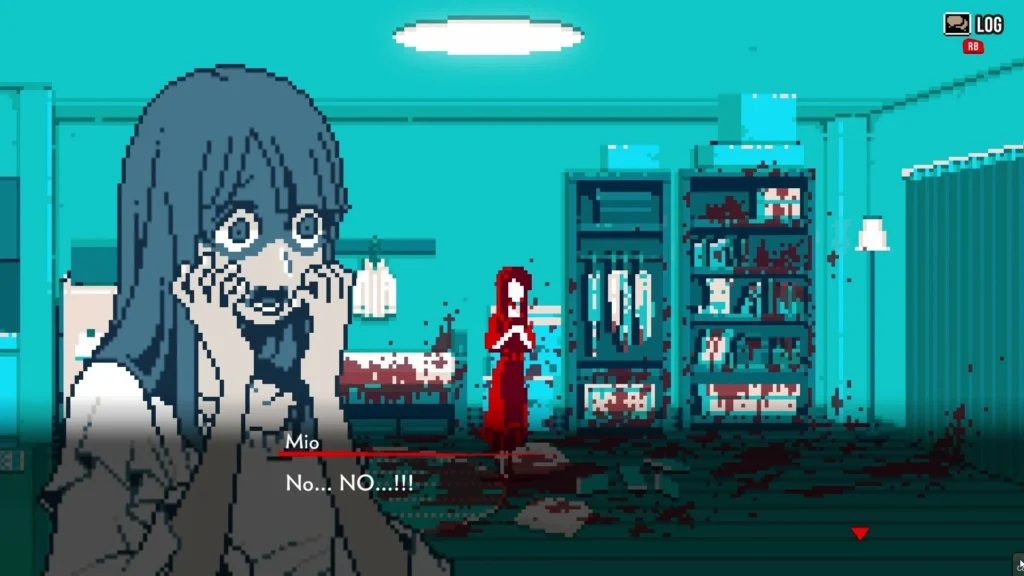
3rd Place: Urban Myth Dissolution Center
Now we’re getting to the good stuff. This pixel-art mystery adventure became the surprise darling of the survey, appearing on an absurd number of individual ballots. Developed by Hakababunko and published by Shueisha Games, it’s a psycho-detective game where you investigate cursed relics and dimensional anomalies through psychedelic pixel art. The fact that it bridged the gap between indie lovers and AAA titans is the kind of signal flare that should have every narrative game developer paying attention.
4th Place: Donkey Kong Country: Bananza
Nintendo’s Switch 2 exclusive proving that great platforming never goes out of style with Japanese developers.
5th Place: Mario Kart World
Another Switch 2 launch title, because sometimes you just want to throw shells at your friends in glorious 4K.
 AAA John Wick Game Is Officially In Development And Will Be Announced Soon, Confirms Lionsgate Executive (2026)
 The Real Winner: Urban Myth Dissolution Center’s Shocking Dominance
While Clair Obscur officially won the survey, if there’s one game that defined the individual developer lists, it’s Urban Myth Dissolution Center. This thing showed up constantly across votes from developers at completely different studios with wildly different design philosophies.
Think about what that means. You’ve got Kazuhisa Wada from Atlus—the Persona people—ranking it #1. Street Fighter 6’s Takayuki Nakayama put it at #1. That’s a JRPG specialist and a fighting game director both independently choosing the same narrative-focused mystery game. When developers with that much range all gravitate toward the same title, you’re looking at something that transcends genre boundaries.
Released February 13, 2025, for PlayStation 5, Switch, and PC, Urban Myth Dissolution Center tasks you with solving cases involving urban legends, cursed objects, and paranormal phenomena. The gameplay involves collecting evidence from social media posts and using psychic abilities to uncover hidden truths. It’s currently sitting at “Very Positive” reviews on Steam with over 5,200 reviews, and it recently won a 2025 Japan Game Award.
What’s driving this appeal? Honestly, I think developers are starving for games that prioritize atmosphere and storytelling over endless progression systems and live service hooks. Urban Myth Dissolution Center is a complete experience that respects your time and intelligence—no wonder it resonated with people who spend their days wrestling with monetization metrics and corporate oversight that feels increasingly dystopian.
 PS6 Delay: AI’s RAM Hunger Could Push PlayStation 6 Past 2027
 Hideki Kamiya Being Absolutely Hideki Kamiya
In a sea of developers voting for 2025’s hottest new releases, Hideki Kamiya—creator of Bayonetta, Devil May Cry, and Okami—stayed entirely on brand. His list?
- Tetris 99
- Shanghai Refresh
- Super Mario Bros
That’s it. No AAA blockbusters. No cutting-edge graphics showcases. Just pure, timeless gameplay. And you know what? That’s exactly what we love about Kamiya. The man plays Tetris 99 every single day according to multiple interviews, treating it like a daily meditation ritual. He’s been doing this since 2019, regularly taking first place and sharing his victories on social media.
This perfectly captures why the Famitsu survey matters. While major studios chase trends and bloat their games with unnecessary features, one of the industry’s most influential designers is finding pure joy in a battle royale Tetris game from six years ago.
Never change, Kamiya. Never change.
 Best Gaming ISPs for 2026: Top Providers for Lag-Free Play
 The Horror Renaissance in 2025
One pattern that jumped out from the individual ballots: 2025 was clearly a banner year for being scared. Silent Hill f and Ghost of Yotei (which, while not pure horror, definitely has that unsettling atmospheric intensity) appeared as constant fixtures across developer lists.
Here’s the delicious irony—Motoi Okamoto, the actual producer of the Silent Hill series, naturally didn’t vote for his own game. Instead, he picked Magical Girl Witch Trials, which is the kind of curveball that makes you love these surveys. However, his industry peers absolutely showed up for Silent Hill f. Masachika Kawata from Resident Evil and Rui Naito from Suikoden both listed it in their top three picks.
That validation from fellow developers working in the survival horror space proves that the franchise’s revival stuck the landing with the people who understand what makes horror games actually work. These aren’t casual players who get spooked easily—these are professionals who’ve analyzed every scare mechanic and atmosphere-building technique. When they say Silent Hill f works, that means something.
 EA Saudi Buyout Explained: The $55 Billion Deal That Changes Gaming Forever
 What Yoshinori Kitase’s Vote Tells Us About Industry Values
Want to know what’s really valued in game development circles? Check out what Yoshinori Kitase—Mr. Final Fantasy himself, the man behind some of the most polished RPGs ever made—voted for as one of his top picks: Cairn, a demo of an indie climbing game.
Read that again. One of the most influential JRPG directors in history chose an incomplete indie game demo over dozens of major 2025 releases. That’s not a political statement or trying to seem cool—that’s a veteran developer recognizing something essential about game feel that transcends budget and production values.
This perfectly illustrates what separates developer opinions from casual players and critics. Kitase isn’t impressed by graphics or marketing budgets. He’s responding to the core mechanical design, the way Cairn makes climbing feel. It’s the kind of detail that only someone with decades of experience crafting interactive experiences would prioritize.
 Arc Raiders ABMM: The Hidden Matchmaking System Finally Confirmed
 The Yakuza Connection: Ryosuke Horii’s Surprising Pick
Here’s another gem that explains so much about a beloved franchise: Ryosuke Horii from RGG Studio (the Yakuza/Like a Dragon team) picked Thank Goodness You’re Here! as one of his favorites. If you’re not familiar, it’s an absurdist British comedy game that’s basically interactive Monty Python.
And suddenly, the entire tone of the Yakuza series makes perfect sense, doesn’t it? The way those games seamlessly blend serious crime drama with completely bonkers side content—helping a dominatrix find her S&M gear, managing a cabaret club, racing slot cars with yakuza bosses—that’s the sensibility of developers who appreciate absurdist comedy at its core.
It’s these individual picks that make the Famitsu survey invaluable. You’re not just getting a ranked list of games; you’re getting insight into the creative DNA of the people shaping your favorite franchises. When you understand what makes RGG Studio tick, you understand why their games feel the way they do.
 God of War: Amazon Just Ordered Two Seasons, So Get Ready For The Remasters
 Comparing Japanese Votes vs Western GOTY Picks
One fascinating aspect of this survey is how it diverges from Western award shows. The Game Awards 2025 heavily favored different titles in several categories, while the Golden Joystick Awards matched Japanese developers more closely on Clair Obscur.
Japanese developers clearly value gameplay feel and mechanical innovation differently than Western critics. While Western outlets often prioritize narrative scope and production values, Japanese developers seem to care more about how a game feels in your hands. That’s why Urban Myth Dissolution Center dominated individual ballots despite being a modest indie production—it nailed the detective game mechanics in a way that resonated with people who understand game design at a fundamental level.
The Ghost of Yotei situation is telling too. It got completely shut out at Western awards but placed second here. Japanese developers appreciated aspects of the game—cultural authenticity, atmospheric design, combat flow—that maybe didn’t translate as strongly to Western critics who were comparing it more directly to its predecessor’s impact rather than judging it on its own merits.
 Math Proves Some ‘ARC Raiders’ Skills Are Actually Traps (RIP ‘Calming Stroll’)
 Why Death Stranding 2 Failed to Crack the Top 5
Here’s a shock: Death Stranding 2: On The Beach didn’t even make the top five, despite the original Death Stranding winning this exact survey back in 2019. That’s a significant statement from Japanese developers about how sequels need to bring something genuinely new to the table.
The original Death Stranding was revolutionary in its social strand system and its willingness to make “walking simulator” mechanics actually engaging. Six years later, even with Kojima’s pedigree, the sequel couldn’t recapture that initial magic for developers who’ve now seen that trick before.
It’s a reminder that innovation matters more than brand names in developer circles. These are people who’ve studied Kojima’s work for decades—they’re not going to give him a pass just because his name is on the box. The game needs to deliver mechanically, not just conceptually.
 Mexico Cancels 8% Violent Video Game Tax Days Before 2026
 What This Survey Means for Gaming in 2026 and Beyond
If you want to know where the industry is heading, don’t look at sales charts or publisher earnings calls. Look at what the creators are playing.
The dominance of narrative-focused games like Urban Myth Dissolution Center and the continued respect for pure mechanical design (hello, Tetris 99) suggests we might be hitting a breaking point with live service bloat and endless content treadmills. Developers are gravitating toward complete, focused experiences that respect player time and intelligence.
The success of Clair Obscur: Expedition 33 among action game veterans shows there’s still massive appetite for turn-based combat when it’s done with genuine innovation. We might see more AAA studios taking risks on systems that aren’t just “mash button for awesome” after seeing how enthusiastically Japanese developers embraced Sandfall’s approach.
And the horror renaissance isn’t slowing down. When Resident Evil and Suikoden directors are both championing Silent Hill f, that’s a signal that atmospheric horror done right can still captivate even the most jaded industry veterans.
 CD PROJEKT co-founder Michał Kiciński acquires GOG from CD PROJEKT
 The Full List of Notable Developer Voters
The survey included some absolute legends from across the Japanese gaming industry. Here’s a partial list of the 191 developers and celebrities who participated:
- Hideki Kamiya – Devil May Cry, Bayonetta, Okami (Clovers Inc.)
- Akira Yamaoka – Silent Hill composer
- Takayuki Nakayama – Street Fighter 6 director
- Yoshinori Kitase – Final Fantasy series producer
- Naoki Hamaguchi – Final Fantasy VII Rebirth director
- Naoki “Yoshi-P” Yoshida – Final Fantasy XIV producer/director
- Katsuhiro Harada – Tekken series producer
- Koji Igarashi – Castlevania producer, Bloodstained creator
- SWERY – Deadly Premonition director
- Daisuke Ishiwatari – Guilty Gear creator (Arc System Works)
- Kazuhisa Wada – Persona Studio
- Ryosuke Horii – RGG Studio (Yakuza/Like a Dragon)
That’s a who’s who of Japanese game development. When these people agree on something, the industry listens.
 Report: Creative Assembly Will Reveal A Sci-Fi ‘Total War’ At The Game Awards
 How to Access These Games Yourself
Inspired by what Japanese developers are playing? Here’s how to check out the top titles:
Clair Obscur: Expedition 33 is available on PlayStation 5, Xbox Series X|S, and PC. The game launched April 24, 2025, and despite some controversy around AI usage during development (which the director admitted they “tried but didn’t like”), it’s been sweeping awards shows and clearly resonating with both players and developers.
Ghost of Yotei is a PlayStation 5 exclusive that launched October 2, 2025. If you loved Ghost of Tsushima, this sequel delivers more of that atmospheric samurai action with new characters and setting.
Urban Myth Dissolution Center launched February 13, 2025, for PlayStation 5, Switch, and PC via Steam. It’s currently 15% off on Steam and supports 13 languages including English. With “Very Positive” reviews and a price point around $15-20, it’s an easy recommendation if you love mystery adventures.
Donkey Kong Country: Bananza and Mario Kart World are both Nintendo Switch 2 exclusives, requiring the new hardware that launched in 2025.
 Naughty Dog Is Back To Mandating Crunch, And They Gave Employees A ‘Suffering’ Coin To Prove It
 Frequently Asked Questions
Who won the Japanese game devs pick 2025 GOTY survey?
Clair Obscur: Expedition 33 won Famitsu’s “Super Popular Game Of The Year” for 2025, chosen by 191 Japanese developers and industry celebrities. The French-developed JRPG dominated the official voting after sweeping awards at the Golden Joystick Awards and The Game Awards. Ghost of Yotei took second place, while Urban Myth Dissolution Center surprisingly claimed third.
Is there a Japanese game devs pick 2025 GOTY video I can watch?
While Famitsu hasn’t released an official video announcement for the 2025 survey results, the full rankings were published in Weekly Famitsu issue #1880 (released December 25, 2025). Individual developer picks were translated and shared by HDKirin on Bluesky, providing detailed breakdowns of who voted for what. Most gaming news outlets have covered the results with their own video breakdowns and analysis.
How does Famitsu’s survey work?
Famitsu polls Japanese game developers and celebrities, asking them to select their top five favorite games from the year. Points are awarded based on ranking position, then tallied to create the final “Super Popular Game Of The Year” list. The survey has been running for 11 years, with previous winners including Dragon Quest 3: HD-2D Remake (2024), The Legend of Zelda: Tears of the Kingdom (2023), Elden Ring (2022), and Death Stranding (2019).
Why didn’t Western games dominate the list?
Japanese developers often prioritize different aspects of game design than Western critics. Gameplay feel, mechanical innovation, and atmospheric design tend to matter more than narrative scope or production budget. That’s why smaller titles like Urban Myth Dissolution Center can dominate individual ballots—they excel at core mechanics that professional developers appreciate. The list isn’t about commercial success or marketing reach; it’s about what games resonated with people who make games for a living.
Will individual developer votes be published?
Famitsu typically doesn’t include individual developer selections on their official website, but these details usually get posted online through translations and community sharing. For 2025, HDKirin on Bluesky provided comprehensive translations showing exactly who voted for what, revealing fascinating insights like Hideki Kamiya voting for Tetris 99 and Yoshinori Kitase choosing an indie climbing game demo over major AAA releases.
 Get Sceptilite in Pokemon Legends: Z‑A Ranked Battles Season 5 (2026)
 Final Thoughts: Trust the People Who Make Your Favorite Games
If you’re looking for game recommendations over the holiday break or planning your 2026 gaming calendar, you could do worse than following what 191 Japanese developers chose as their favorites. These aren’t people chasing trends or trying to please advertisers—they’re creators who understand game design at its core, voting for what they actually enjoyed playing after long days making their own games.
The Famitsu survey matters because it strips away everything except the fundamental question: was this game good enough that a professional developer chose to spend their limited free time playing it? When the answer is yes from people like Kitase, Kamiya, and Nakayama, that tells you something meaningful about what makes games worth playing.
Clair Obscur deserved its win. Ghost of Yotei proved sequels can succeed on their own merits. Urban Myth Dissolution Center reminded us that innovation and atmosphere matter more than budget. And Hideki Kamiya reminded us all that sometimes the best game is just good old Tetris 99.
That’s the beauty of this survey—it’s honest, it’s unpredictable, and it gives you a genuine window into what the industry’s elite actually values. No PR spin, no corporate mandates, just developers appreciating good games.
Now if you’ll excuse me, I have an Urban Myth Dissolution Center playthrough to start and a sudden urge to lose spectacularly at Tetris 99.
 Rainbow Six Siege Hacked: Billions in R6 Credits Flood Accounts