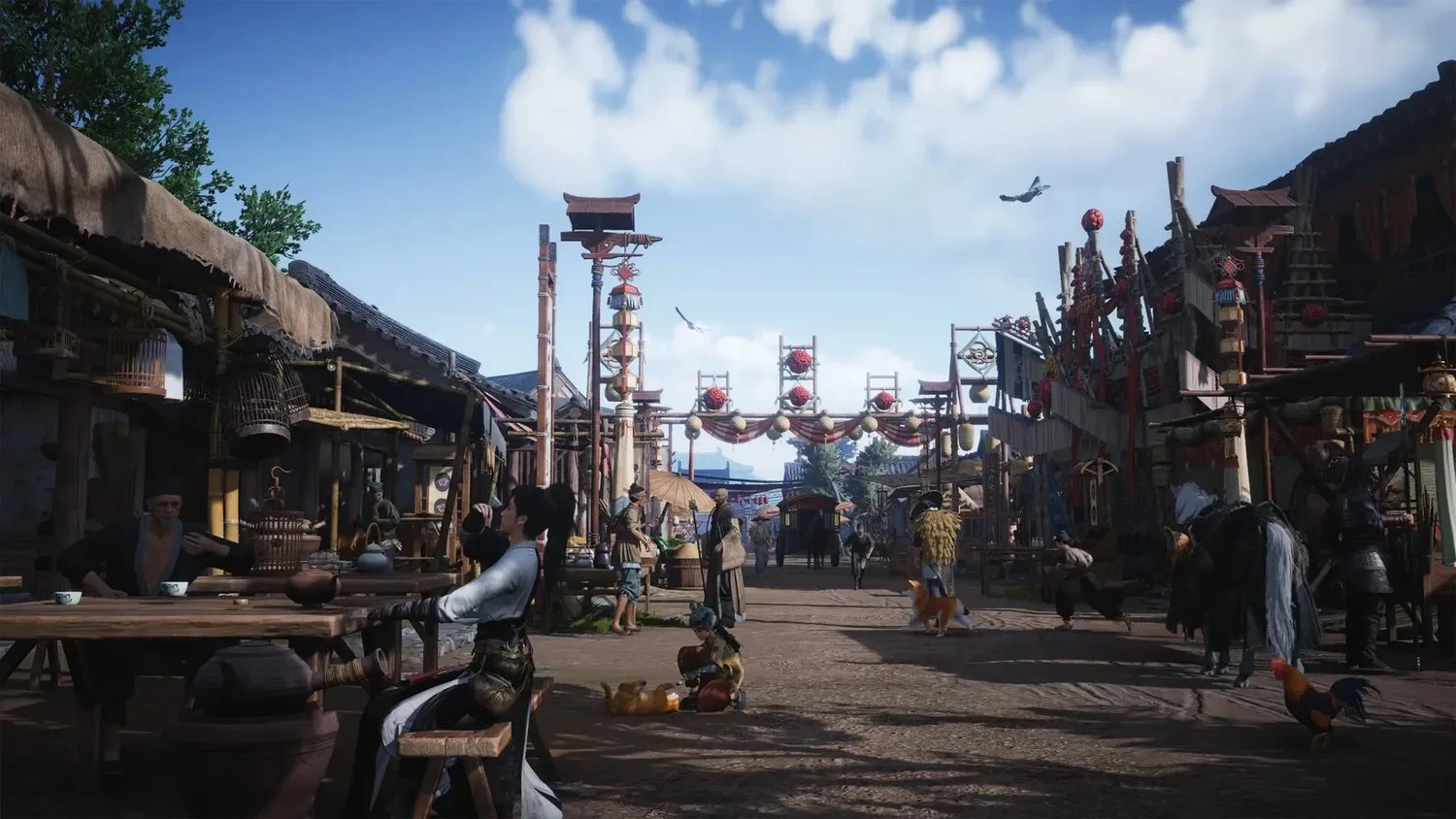
Where Winds Meet features a comprehensive relationship system allowing player marriages, offering gameplay advantages that extend far beyond simple roleplay mechanics.
This wuxia action RPG surprised many players with its elaborate social features. Beyond the martial arts combat and aerial techniques, the game includes an intricate marriage system complete with ceremonies, intimacy progression, and even matchmaking services. What makes these relationships valuable isn’t just the roleplay element partnerships deliver concrete gameplay benefits including adventure slip bonuses, teleportation capabilities, and exclusive cooperative features.
The social framework encompasses multiple relationship categories. Players can develop NPC friendships for material rewards, establish discipleship bonds between veterans and newcomers, create sworn brotherhood groups, and form complete marriages with wedding ceremonies and exclusive titles. Each category provides distinct progression paths and rewards. While this guide emphasizes romantic partnerships due to popular demand, we’ll explore all relationship types since they interconnect within the game’s social ecosystem.
 The Complete Arc Raiders Ballistics Guide: Every Single Grenade, Driver, and Duck Explained
 Table of Contents
How Romance Actually Works (And Why Gender Doesn’t Matter)
Player-to-player partnerships form the foundation of Where Winds Meet’s romance system. NPCs remain off-limits for marriage regardless of affinity levels or gift-giving efforts. The merchant with exceptional inventory? Purely platonic. Partnership mechanics function exclusively between player characters.
Gender restrictions don’t exist within the partnership system. Any character can marry any other character without limitations. The developers implemented complete freedom for player relationships, avoiding arbitrary restrictions common in other MMORPGs.
Global version players maintain one active partnership simultaneously. The Velvet Shadows sect reportedly enables multiple partnerships, but this faction hasn’t launched in Western releases yet. Current players commit to singular partnerships choose carefully or face uncomfortable virtual divorce proceedings.
Partnerships function as legitimate marriages complete with ceremonies, special titles, exclusive emotes, and escalating bonuses based on collaborative playtime. This isn’t cosmetic friendship labeling—NetEase invested substantial development resources creating a fully-featured marriage system.
 EU5 Government Guide: Societal Values Explained
 Setting Up Your Partnership (The Actual Wedding Process)
Partnership formation requires reaching Intimacy Level 2 (Companions) with your intended spouse. This second-tier relationship status unlocks through active cooperative play or gift exchanges. The progression isn’t demanding it serves as a mutual familiarity checkpoint before marriage.
Upon achieving Companions status, initiate the official process through your menu system (Esc on PC, Start on PS5). Navigate to Social, select Partnership, then choose “Go to Partnership” and designate your partner. Group formation is mandatory since solo weddings violate basic logic.
The ceremony occurs at Red Maple Forest with NPC Shi Yimo serving as wedding officiant. Approach Shi Yimo to access partnership formation options or fateful connection entry. Select partnership to commence the wedding ceremony and formalize your marriage.
Active partnerships enable partnership level progression for enhanced bonuses. Players accumulate partnership points and Harmony Tokens, exchangeable at dedicated shops for exclusive rewards. The system incentivizes continued cooperation rather than post-marriage neglect essentially encouraging relationship maintenance through gameplay mechanics.
 How to Build My Winter Car Corris Rivett – ALL PARTS & ASSEMBLY PROCESS EXPLAINED
 The Fateful Search: Matchmaking for the Lonely
Players lacking partnership prospects can utilize Fateful Search, Where Winds Meet’s integrated matchmaking system functioning as relationship classifieds.
Visit the Wishing Band Tree in Red Maple Forest near Shi Yimo. This location allows message posting describing ideal partner preferences. Other players browsing Fateful Search read these messages and initiate contact with compatible candidates. The community demonstrates surprising earnestness writing partnership proposals.
Message styles range from practical “seeking active daily partner” announcements to elaborate roleplay character narratives with detailed backstories. Some players compose multi-paragraph epics about wandering warriors seeking martial world companions genuinely impressive dedication.
The system isn’t guaranteed success it depends on active players checking message boards and reaching out. However, for solo players wanting partnership engagement without existing social networks, Fateful Search provides the optimal solution. It beats broadcasting marriage proposals in global chat channels, which creates universal awkwardness.
 My Winter Car Editor Guide: MSCEditor Setup, Cheats & Save File Fixes (2026)
 The Intimacy System: 10 Levels of Increasingly Elaborate Friendship
Intimacy measures player bonds on a 1-10 scale, applying to all player relationships beyond just romantic partnerships. Progress increases through cooperative gameplay, co-op content completion, or inventory gift exchanges.
Each intimacy level requires ceremonial advancement after meeting thresholds. Direct grinding to maximum levels isn’t possible specific milestones demand formal ceremonies with friends or partners to unlock subsequent tiers. NetEase emphasized ceremonial significance for every achievement, creating elaborate but effective progression.
Level 1 (Acquainted) provides 10% bonus adventure slips during cooperative play. Adventure slips represent crucial currency, making this bonus immediately valuable.
Level 2 (Companions) increases adventure slips to 15% and unlocks synced actions for coordinated player movement. Primarily useful for screenshots with limited practical application.
Level 3 (Kindred) boosts adventure slips to 20%, adds online login notifications, and unlocks Shadow Pairs a cooperative drinking emote. Login notifications excel for coordinating play sessions.
Level 4 (Comrades) delivers 25% adventure slip bonuses and unlocks Camaraderie I, permitting 30-minute weekly outfit borrowing. Premium cosmetic owners can share appearances with partners.
Level 5 (Allies) increases bonuses to 30%, enables instant teleportation to friends within identical scenes, and activates Open Door for confirmation-free multiplayer session joining. Teleportation eliminates location coordination frustrations.
Level 6 (Harmony) grants 35% adventure slip bonuses and upgrades Camaraderie to tier II, allowing twice-weekly 30-minute outfit borrowing sessions.
Level 7 (Enduring) provides 40% bonuses and unlocks Known By All, enabling confirmation-free automatic team joining. Continuous quality-of-life improvements.
Level 8 (Sworn) offers 45% adventure slip bonuses, upgrades Camaraderie to tier III with 60-minute borrowing twice weekly, and grants exclusive friendship badges.
Level 9 (Destined) increases bonuses to 50%. Level 10 (Vowed) maximizes at 55% bonus adventure slips.
Maximum intimacy’s 55% adventure slip bonus significantly impacts resource accumulation. Regular grinding with consistent partners generates over 50% additional slips compared to solo play mathematically compelling for maintaining high-intimacy relationships.
 ARC Raiders on Steam Deck: The Complete Settings and Performance Guide
 NPC Relationships: You Can’t Marry Them But You Should Still Be Nice
NPC romance remains impossible despite wishful thinking. However, platonic NPC relationships deliver valuable rewards including better merchant pricing and personal storylines.
Increase NPC affinity through quest completion, favor fulfillment, and gift-giving. Each NPC has preferred items accelerating affinity gains. Regular NPC conversations and attention to dialogue choices matter some conversations boost affinity while others provide neutral filler.
Higher merchant NPC affinity improves available stock and occasionally reduces prices. Frequent purchases from specific vendors benefit directly from raised affinity. Non-merchant NPCs unlock personal story quests at high affinity levels, providing lore and unique rewards.
Consequences exist for negative behavior criminal activities or faction opposition decrease affinity with aligned NPCs. This can eliminate quest access or trigger sect expulsion. The system penalizes antisocial behavior appropriately.
 Octopath Traveler 0 Tips: 15 Game-Changing Secrets I Wish I Knew Earlier
 Discipleship: The Master and Student Dynamic
Discipleship establishes mentorship relationships separate from romance. Players reaching level 50 qualify as masters accepting up to five disciples. Disciples maintain single master relationships without change options post-graduation permanent mentor commitment.
No level requirements exist for discipleship, but relationships naturally conclude at level 40 upon reaching Single Player Mode Level 4 and Discipleship Level 3. Graduation permanently ends mentorship while granting commemorative titles.
Masters guide disciples through content, provide strategic advice, and assist progression. Both participants receive bonuses and exclusive currency from cooperative play. Structured mentorship benefits all involved parties.
This system substantially helps confused newcomers. Players struggling with combat mechanics or progression systems gain accelerated learning through experienced masters essentially personal tutoring with gameplay bonuses.
 Stop Building Like A Noob: Advanced Tactics To Break ‘Alchemy Factory’
 Blood Brothers: Group Bonds for Your Regular Squad
Blood Brothers accommodate up to 10 players in groups designed for recurring multiplayer content. These function as mini-guilds emphasizing regular co-op play over massive organizational management.
Sworn brotherhood formation with other players generates bonuses for collaborative content completion. This relationship type optimizes consistent groups tackling world bosses, dungeons, and cooperative activities. Bonuses reward stable partnerships over random grouping.
Blood Brothers provide social infrastructure without full guild commitments. No massive organization management with hierarchical politics just maintaining bonds with small regular player groups you genuinely enjoy.
 My Winter Car Fatigue Guide: How Fatigue Works?
 Why Any of This Actually Matters
Relationship systems deliver tangible benefits alongside roleplay elements. Maximum intimacy’s 55% adventure slip bonus substantially increases resource income. Teleportation and auto-join features streamline cooperative sessions, eliminating tedious coordination. Outfit borrowing enables cosmetic experimentation without ownership.
Beyond mechanics, these systems deepen multiplayer experiences. Sustained partnership play with rising intimacy levels creates progression beyond character power. Ceremonies and titles transform milestones into meaningful achievements rather than arbitrary numbers.
Primarily solo players can ignore most relationship features. However, any multiplayer engagement benefits from relationship building. Stacking bonuses, improving quality-of-life features, and consistent partnerships simplify challenging content significantly.
The partnership system specifically demonstrates surprising design quality for potentially throwaway roleplay content. Progression feels meaningful, rewards prove substantial, and Fateful Search accommodates players without existing social circles.
Whether pursuing wuxia romance, reliable cooperation partners, or maximizing adventure slip income, relationship systems merit investment. They’re optional but far from pointless plus where else can you marry in ancient China while combating mechanical threats? The premise speaks for itself.
 My Winter Car Tips: 7 Essential Secrets The Game Won’t Tell You (2026)