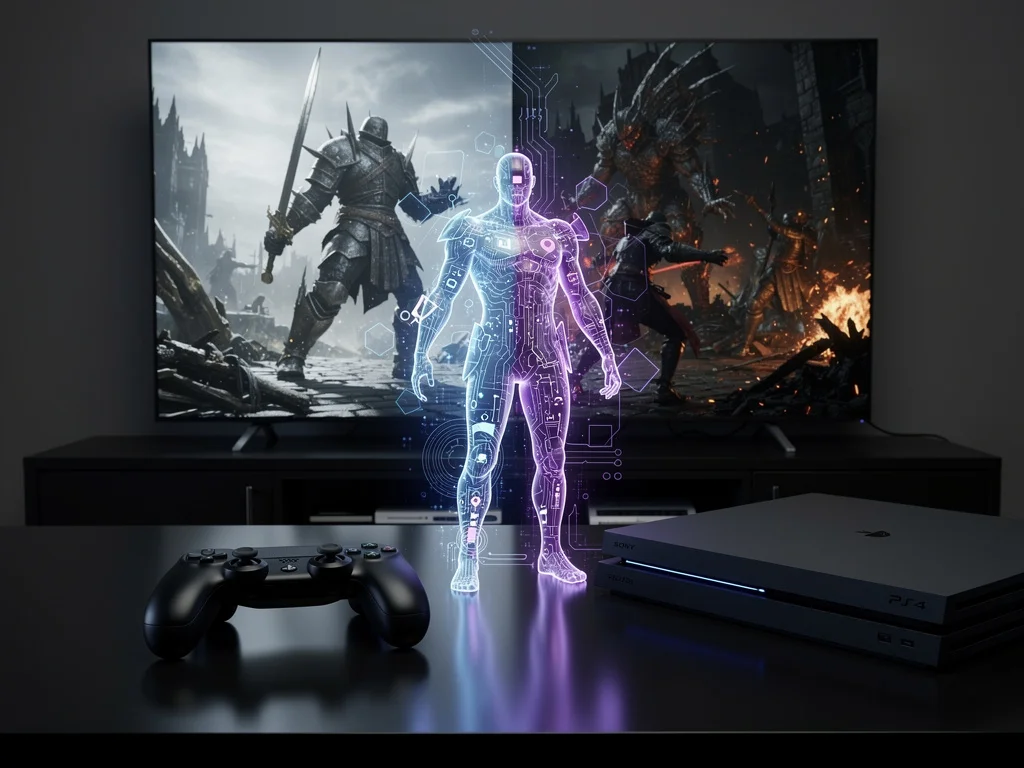
I’ve been playing games for over two decades, and I’ve watched tutorials evolve from cryptic instruction manuals to YouTube walkthroughs to in-game hint systems. But nothing prepared me for what Sony is cooking up with their latest patent filing. The Sony AI Ghost Player concept represents something entirely different—an AI-powered spectral companion that could literally play your games alongside you, showing you exactly how to beat that boss you’ve been stuck on for three hours.
When I first read about this patent, my reaction was split right down the middle. Part of me thought, “Finally, something that could help my dad actually finish Elden Ring.” The other part screamed, “This is everything wrong with where gaming is headed.” And honestly? Both reactions are valid.
AI has become gaming’s latest gold rush. It’s the flashy obsession that tech giants are desperately cramming into every corner of the industry, regardless of whether players actually asked for it. Microsoft already pitched us an AI assistant to handle Minecraft crafting, and now Sony appears to be exploring something even more absurd: a system where the game essentially plays on your behalf. A recent report from BoingBoing spotlighted a patent application for an “AI-Generated Ghost Player,” which reads like a white flag waved at the very concept of game design.
 Valve’s “Lepton” Leak Just Saved The Steam Frame From Being A Paperweight
 Table of Contents
Key Takeaways:
- Sony has filed a patent for an AI-Generated Ghost Player system that provides real-time gameplay assistance
- The system uses machine learning to analyze player behavior and demonstrate optimal strategies through ghostly avatars
- Multiple assistance modes range from simple button prompts to “Full Game” mode where the AI handles everything
- The patent represents a significant evolution from Nintendo’s Super Guide, using adaptive AI instead of pre-recorded solutions
- Community reaction remains divided between accessibility benefits and concerns about skill development
What Is the Sony AI Ghost Player System?
Let me break down what Sony’s patent actually describes, because the gaming internet has already run wild with assumptions. The Sony AI Ghost Player system is essentially an AI-powered tutorial companion that can manifest as a visual character within your game. Unlike the pre-recorded ghost runs you might know from racing games or the Souls series, this ghost is generated in real-time based on current gameplay conditions.
Here’s how it works in practice: the system continuously monitors your gameplay data—your inputs, timing, failures, and progression patterns. When it detects you’re struggling (either through repeated deaths or hesitation), it can introduce an AI-controlled ghost into your game. This ghost doesn’t take over your character; instead, it demonstrates the optimal actions, paths, or strategies relevant to your current situation.
 South Korea Proposes Serious Loot Box Law Overhaul
 Think about getting stuck on a particularly nasty platforming section. The Sony AI Ghost Player patent suggests the ghost could demonstrate the exact timing of a difficult jump, show you the safe path through a puzzle, or illustrate the positioning needed to defeat a tough enemy. It’s like having an expert friend sitting next to you, except that friend is made of algorithms and machine learning models.
The visual representation options are surprisingly flexible. According to the patent documents, the ghost could appear as a fully rendered character, a shadow figure, a user-generated avatar, or even a character from an entirely different game. Sony clearly wants players to have some control over how this AI assistant integrates with their gaming experience.
 Brandon Sanderson Is Close to Adapting Mistborn Into a Video Game
 How Sony AI Ghost Player Differs from Traditional Assist Systems
If you’ve been gaming for a while, you probably remember Nintendo’s Super Guide from the Wii era. When you died eight times on a level in New Super Mario Bros. Wii, a little block would appear offering to let Luigi complete the level for you. It was clever, but it was also incredibly limited—just a pre-recorded solution that didn’t adapt to your specific struggles.
The Sony AI Ghost Player represents a fundamental leap beyond that approach. Instead of relying on developer-created walkthroughs, this system generates assistance dynamically based on AI models trained on gameplay footage from multiple sources. The ghost doesn’t follow a script; it responds to your exact situation in real-time.
This matters more than you might think. Traditional assist modes often feel like cheating because they’re binary—either the game plays itself, or you’re on your own. Sony’s approach offers a spectrum of assistance that can dial up or down based on your needs. Struggling with just the combat? The ghost can focus on that. Can’t figure out where to go? It’ll show you the path without spoiling the fights.
For players who take their online gaming seriously or spend hours perfecting their skills, this contextual approach could mean the difference between feeling assisted and feeling patronized. And that distinction is crucial for maintaining engagement with challenging games.
 A new website for Prince of Persia: The Sands of Time has been registered and updated recently (2026)
 The Sony AI Ghost Player Patent: Understanding the Technical Reality
Before we get too excited (or too angry), let’s pump the brakes and talk about what this patent actually means from a legal standpoint. As one helpful patent attorney pointed out on Reddit, Sony hasn’t actually patented the Sony AI Ghost Player technology yet. What they’ve filed is a PCT application—essentially a placeholder that allows them to pursue patents globally later on.
This is an important distinction. The claims haven’t been examined, and there’s absolutely no guarantee this technology will ever be granted patent protection, let alone implemented in actual PlayStation games. Companies file patents for concepts they never use all the time. It’s partly defensive strategy, partly R&D documentation, and partly keeping their options open.
That said, the fact that Sony is investing resources into developing and documenting this technology tells us something about their strategic thinking. They see AI-powered gameplay assistance as a potential future feature, even if the current implementation is years away from consumer products.
The technical requirements alone present significant challenges. Training AI models on gameplay footage from diverse games, ensuring the ghost provides actually helpful guidance rather than leading players into worse situations, and integrating all this without killing frame rates or requiring constant internet connections—these are non-trivial problems that Sony’s engineering teams would need to solve.
 Leak: PlayStation Starts 2026’s PS Plus Essential Games with NFS Unbound, Epic Mickey, and Core Keeper
 Why Sony Is Exploring AI-Driven Gameplay Help
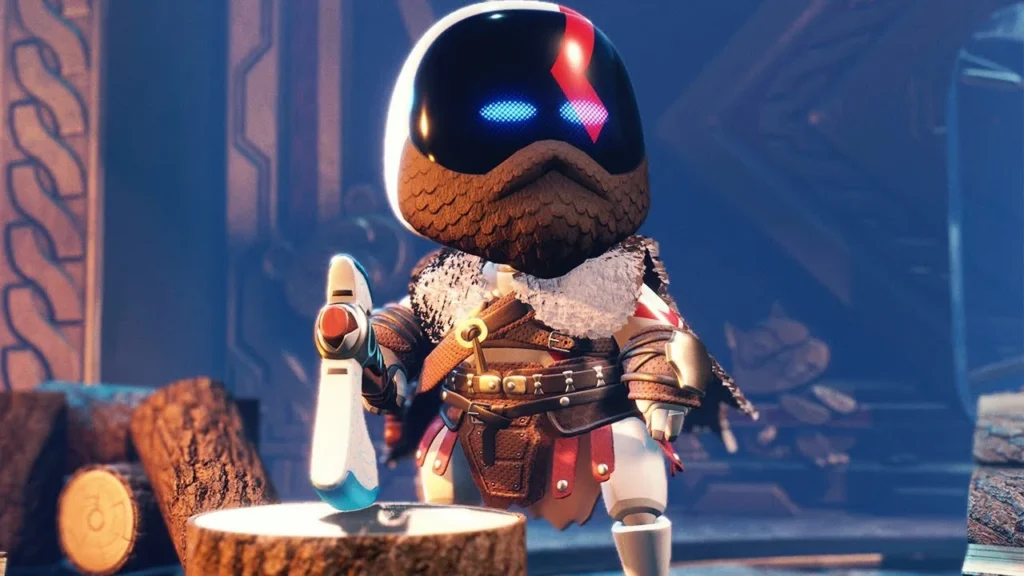
Let’s be honest about something: modern games have become incredibly complex. I’ve been playing games since the NES days, and the gap between what was expected of players then versus now is astronomical. Games like Elden Ring, Baldur’s Gate 3, and even titles like Astro Bot layer dozens of interconnected systems that can overwhelm newcomers.
Sony knows this. They’ve seen the data on player drop-off rates—how many people buy games but never finish them, often because they hit difficulty walls they can’t climb over. The Sony AI Ghost Player system addresses this problem directly by providing adaptive assistance that meets players where they are.
For game developers, this technology could be transformative. Instead of designing games with the lowest common denominator in mind, or creating multiple difficulty settings that fracture the player base, developers could create deeper, more challenging systems knowing that AI assistance can help struggling players catch up. The game stays hard for those who want the challenge; others get help when they need it.
This accessibility angle resonates strongly in 2025. The gaming audience has expanded dramatically, bringing in players of all ages and skill levels. My own mother recently started gaming, and watching her struggle with basic platforming mechanics reminded me how much we take for granted as experienced players. A system like this could be the difference between her giving up and her discovering a new hobby.
 Mexico Cancels 8% Violent Video Game Tax Days Before 2026
 Community Reactions to Sony AI Ghost Player Patent
Predictably, the gaming community’s response to the Sony AI Ghost Player patent has been mixed. On one side, you’ve got accessibility advocates celebrating a potential tool that could open gaming to more people. On the other, you’ve got purists who see this as another step toward games that play themselves.
The purist argument has merit. There’s something fundamentally valuable about the struggle-and-overcome loop that defines challenging games. The satisfaction of finally beating a boss after fifty attempts comes directly from those forty-nine failures. If an AI ghost shows you exactly how to win, does the victory still mean anything?
But here’s what I keep coming back to: the feature is optional. If you want the full unassisted experience, you just… don’t activate the ghost. The existence of an assist feature doesn’t diminish your personal achievement in completing a game without it. We’ve had cheat codes, walkthroughs, and summon mechanics for decades without them destroying the core gaming experience.
The more legitimate concern involves how this might influence game design. If developers know that AI assistance will catch struggling players, might they design games that are frustrating by default, essentially requiring the AI to be enjoyable? This happened with mobile games and microtransactions—design intentionally friction-filled to encourage spending. I hope Sony is smart enough to avoid repeating that pattern.
 Rumor: Ubisoft Just Lost 900GB of Data in Massive ‘MongoBleed’ Hack
 The Elephant in the Room: AI Is Terrible at Playing Video Games
Here’s the thing that most coverage of the Sony AI Ghost Player glosses over: current AI systems are genuinely bad at playing video games. We’re talking about technology that still struggles to draw hands correctly, and Sony wants it to teach us the parry windows in Sekiro?
The concern isn’t theoretical. Anyone who’s used an LLM for gaming advice knows how confidently wrong these systems can be. They’ll suggest strategies that sound plausible but lead you straight into disaster. Calling an AI ghost into Elden Ring to help with Malenia might just result in two red smears on the floor instead of one.
Sony’s patent does acknowledge this problem implicitly. The system is designed to be trained on actual gameplay footage from successful runs, not to improvise based on general AI knowledge. But training data has its own issues—what works for one player might be terrible advice for another with different skill levels and playstyles.
Security considerations matter here too. With recent incidents like the Rainbow Six Siege hack demonstrating how vulnerable gaming systems can be, adding AI components that interact with gameplay introduces new attack surfaces. What happens if someone figures out how to manipulate the ghost’s behavior to grief other players?
 God of War: Amazon Just Ordered Two Seasons, So Get Ready For The Remasters
 Sony’s Broader AI Gaming Strategy
The Sony AI Ghost Player patent doesn’t exist in isolation. Sony has been filing AI-related gaming patents at an impressive clip, painting a picture of a company that sees artificial intelligence as central to gaming’s future.
Other recent patents include AI systems that can replicate player playstyles for NPC companions—imagine training an AI on how your friend plays, then using that AI teammate when they’re not online. There’s also technology for using AI to expedite game remasters, essentially teaching machines to upscale and modernize graphics without expensive manual work.
Perhaps most controversially, Sony patented AI censorship tools that could modify game content in real-time based on parental settings. Picture the system automatically removing blood effects, blurring violent scenes, or muting profanity on the fly. It’s impressive technology that also raises serious questions about content integrity and artistic vision.
Under Hiroaki Kitano’s leadership at Sony AI, the company has positioned itself as a serious player in artificial intelligence research. Kitano’s background—he’s the guy who created AIBO and founded the RoboCup robotics competition—suggests Sony isn’t just dabbling in AI for marketing purposes. They’re building genuine technical capabilities that could reshape how we interact with games.
 John Romero’s Cancelled Xbox Game Was A “Priest Simulator” With Hotline Miami Vibes
 How the Sony AI Ghost Player Compares to Xbox and Nintendo Approaches
Sony isn’t the only console manufacturer exploring AI assistance. Microsoft unveiled game assistance AI for Xbox earlier in 2025, integrating chatbot-style help into titles like Minecraft. The reception was… lukewarm at best. Most players promptly ignored it, and the feature became another bullet point in feature lists nobody reads.
The Sony AI Ghost Player patent represents a more ambitious approach. Instead of just talking at you about strategies, the system demonstrates them visually within the game world. It’s the difference between reading about how to swim and having someone actually show you the strokes while you’re in the pool.
Nintendo’s approach has traditionally been more conservative. Their Super Guide system worked well for what it was, but they never pushed it beyond pre-recorded solutions. The company’s subsequent accessibility features—invincibility items, Assist Mode toggles—keep human designers in control rather than delegating to AI.
There’s wisdom in Nintendo’s caution. AI-generated assistance is fundamentally unpredictable in ways that human-designed systems aren’t. But there’s also opportunity in Sony’s ambition. If they can actually make Sony AI Ghost Player technology work reliably, they’ll have created something no competitor offers.
 Xbox Sales Are Down 70%, And It’s Because You’re Broke (And Smart)
 Lessons from Gaming History: Half-Life 2 and the Art of Teaching Without Telling
The discussion around Sony AI Ghost Player inevitably brings up questions about game design philosophy. Some of the best games in history taught players complex mechanics without explicit tutorials, using environmental design and progressive challenge curves to guide understanding organically.
Half-Life 2 remains the gold standard here. The game introduced gravity gun physics, vehicle sections, and squad mechanics without ever pausing to explain them. Instead, Valve designed scenarios where the correct approach was naturally discovered through play. You learned by doing, not by being told.
Does AI assistance represent a retreat from this design philosophy? Maybe. But it’s worth acknowledging that not every game can be Half-Life 2, and not every player has the patience or time for organic discovery. The hardcore gamer who wants to master every system through trial and error is valuable, but so is the parent who gets thirty minutes of gaming time per week and just wants to see what happens next in the story.
The ideal implementation of Sony AI Ghost Player technology would understand this spectrum. It would stay invisible for players who don’t need it, offer subtle guidance for those who want hints, and provide direct assistance only when explicitly requested. Whether Sony can achieve this balance remains to be seen.
 ASUS Rumored to Start Making DRAM: The Truth Behind the Crazy Price Crisis
 What This Means for PlayStation’s Future
Let’s speculate responsibly about where Sony AI Ghost Player technology might actually appear. If the patent is granted and Sony decides to implement the system, the PS5 would likely be the first platform to receive it—though the computational requirements might necessitate cloud processing for complex implementations.
Integration with PlayStation Plus seems likely. Sony loves adding value to their subscription service, and AI assistance features would give Plus subscribers another reason to maintain their membership. Free-to-play support might be limited initially, with full AI ghost capabilities reserved for Plus tiers.
First-party games would obviously get priority support. Imagine fighting Baldur’s Gate-style encounters in the next God of War with an AI ghost that can demonstrate optimal positioning and ability rotations. Or tackling platforming challenges in the next Astro Bot with a ghost that shows precise jump timing.
Third-party support would depend on developer buy-in. Some studios might embrace the technology as a way to reduce player frustration and increase completion rates. Others might reject it as antithetical to their design vision. FromSoftware, for instance, seems unlikely to implement AI assistance in their famously difficult games—though stranger things have happened.
 Assassin’s Creed Black Flag: Pirate Legacy and Remake Rumors Explode
 The Bigger Picture: AI’s Role in Gaming’s Future
Stepping back from the specifics of Sony AI Ghost Player, we’re witnessing a broader transformation in how artificial intelligence integrates with gaming. The industry crossed $250 billion in value in 2024 and shows no signs of slowing. AI technologies are becoming fundamental to how games are developed, optimized, and played.
Machine learning already powers adaptive difficulty systems, generates procedural content, analyzes player behavior for monetization, and creates increasingly realistic NPC behaviors. The Sony AI Ghost Player patent extends this into direct gameplay assistance—a natural evolution of existing trends.
The concerns about AI in gaming mirror broader societal debates about automation. Will AI assistance make us worse players over time, atrophying skills we would have developed through struggle? Will it create two classes of gamers—those who play “pure” and those who rely on AI crutches? These questions don’t have easy answers.
What I do know is that gaming has always evolved by incorporating new technologies, and players have always found ways to engage with games that feel meaningful to them. The existence of walkthroughs didn’t kill gaming. Summon mechanics didn’t ruin cooperative play. Easy modes didn’t destroy narrative games. AI assistance will be absorbed into gaming culture, too, probably with less drama than the current discourse suggests.
 McDonald’s Pokemon Cards 2026: The Ultimate Guide to the 30th Anniversary Promotion
 My Honest Take as a Long-Time Gamer
After spending way too much time thinking about the Sony AI Ghost Player patent, here’s where I land: I’m cautiously optimistic, with significant reservations about implementation.
The optimism comes from accessibility potential. I’ve watched too many people I care about bounce off games they would have loved because of difficulty barriers. If AI assistance can help my dad finally experience the story of Elden Ring, or help my nephew get past the challenging sections of Astro Bot, that’s genuinely good for gaming.
The reservations come from execution concerns. AI technology in 2025 is impressive but inconsistent. The gap between “trained on successful gameplay footage” and “actually provides useful guidance” is larger than marketing materials suggest. Sony would need to nail the implementation to avoid creating a feature that frustrates more than it helps.
There’s also the monetization question. Sony hasn’t announced pricing for AI ghost features, but the subscription economy suggests this won’t be free. If AI assistance becomes gated behind premium tiers, it could create exactly the kind of pay-to-progress dynamic that plagues mobile gaming.
Ultimately, I want Sony AI Ghost Player to succeed because I want more people to experience the games I love. But I’ll be watching the implementation closely, and you should too.
 ARC Raiders Players Are Already “Time Traveling” to the Next Wipe
 Final Thoughts: The Ghost in Gaming’s Machine
The Sony AI Ghost Player patent represents both the promise and the peril of AI integration in gaming. Done well, it could democratize challenging games, helping more players experience content they currently bounce off. Done poorly, it could become another example of AI technology shoved into products where it doesn’t belong.
What matters most is that this feature remains optional and genuinely helpful. The moment AI assistance becomes mandatory or monetized predatorily, the backlash will be severe and justified. Sony needs to learn from the mistakes of other industries that implemented AI without considering user experience.
For now, we’re in the speculation phase. The patent exists, but implementation is far from guaranteed. I’ll be watching how Sony develops this technology, and I’ll be honest with you about whether it lives up to its potential or becomes another cautionary tale about AI hype.
In the meantime, keep gaming, keep struggling, and keep achieving those victories on your own terms. The ghost can wait.
 ‘Clair Obscur’ Just Lost Its Game of the Year Award, And I Am So Sick Of This Exhausting AI Witch Hunt
 Related Reading
Frequently Asked Questions About Sony AI Ghost Player
What is Sony doing with AI?
Sony is actively developing AI technologies across multiple fronts, including the AI Ghost Player system for real-time gameplay assistance, AI-powered NPC companions that replicate player playstyles, and AI tools for expediting game remasters. They’ve also patented AI censorship tools for content moderation and are investing heavily in AI research through Sony AI Inc. Under the leadership of Hiroaki Kitano, Sony has positioned artificial intelligence as a core strategic priority for the future of gaming and entertainment.
What is an AI player?
An AI player in gaming refers to a computer-controlled entity that uses artificial intelligence to make decisions, execute actions, and adapt to gameplay situations. Unlike traditional NPCs that follow scripted behaviors, AI players can learn from gameplay data, adapt to individual player styles, and provide dynamic assistance or competition based on real-time analysis. In the context of Sony’s patent, the AI player manifests as a “ghost” character that demonstrates optimal gameplay strategies rather than competing against the human player.
Who is the head of Sony AI?
Hiroaki Kitano serves as President and CEO of Sony Computer Science Laboratories and is the Chief Technology Fellow at Sony Group Corporation. He founded Sony AI Inc. and has been instrumental in Sony’s AI research initiatives across gaming, imaging, sensing, and gastronomy. Kitano is also known for creating AIBO, the robotic pet, and founding the RoboCup international robotics competition. He received the Computers and Thought Award from the International Joint Conference on Artificial Intelligence and was elected a fellow of the Association for the Advancement of Artificial Intelligence in 2021.
What is the 30% rule in AI?
The 30% rule in AI is a practical guideline suggesting that AI should automate approximately 30% of tasks—specifically the repetitive, mundane, and rules-based work—while humans handle the remaining 70% that requires creativity, judgment, empathy, and strategic decision-making. This framework helps prevent over-automation and ensures AI remains a supportive tool rather than a replacement for human capabilities. In educational contexts, the rule suggests students should limit AI contributions to 30% of their work, ensuring genuine learning and skill development.
Who are the big 4 of AI?
The “Big 4” of AI typically refers to OpenAI, Google (through DeepMind), Microsoft, and Anthropic—the leading companies in artificial intelligence research and development. These organizations dominate the enterprise AI landscape, with Anthropic currently leading enterprise LLM spend at approximately 40%, followed by OpenAI at 27%, and Google at 21%. Together, these three companies account for roughly 88% of enterprise AI API usage. Other major players include Meta (with its open-source Llama models) and Nvidia (which provides the hardware infrastructure powering most AI development).
 One YouTuber Tried To Live A “Normal Life” In Cyberpunk 2077, And It Broke Him