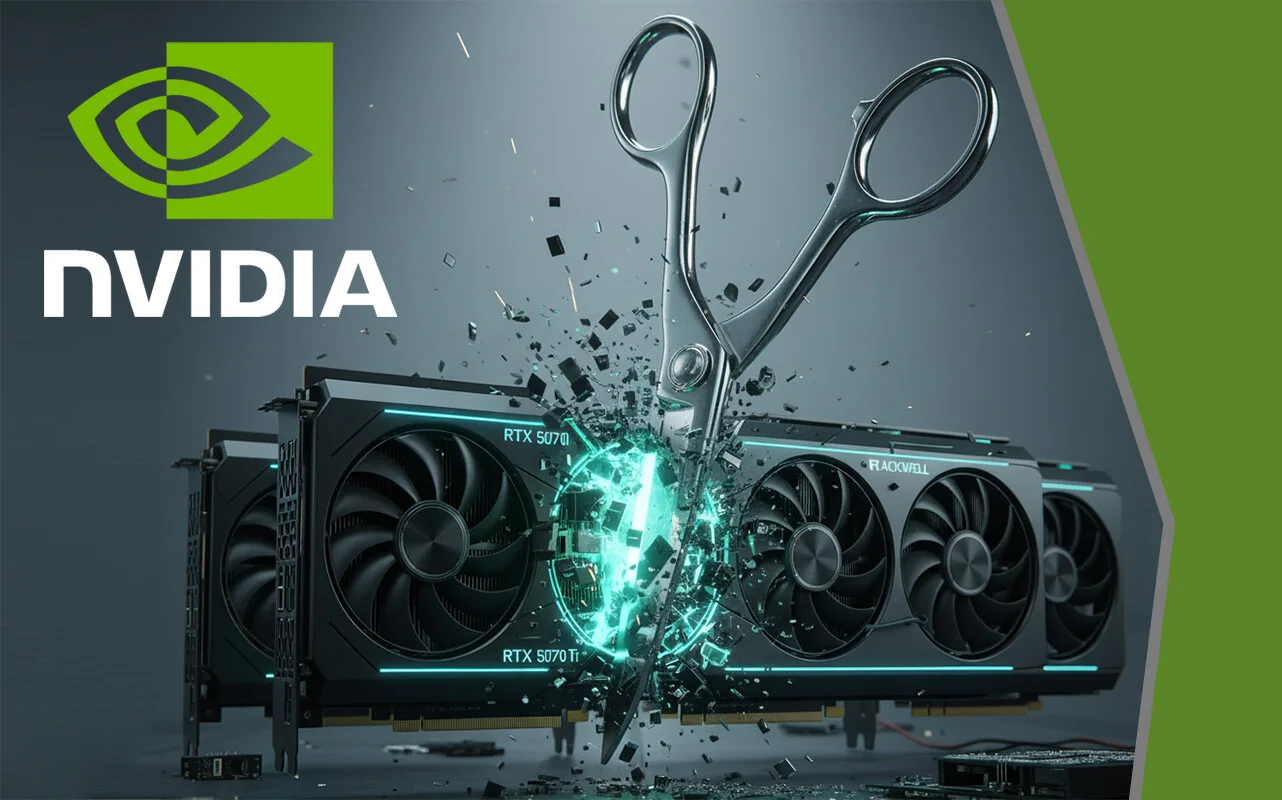
Nvidia is reportedly planning significant production cuts for its GeForce RTX 50 series graphics cards in the first half of 2026, with supply potentially dropping by 30-40% according to recent industry reports.
 The Gaming Industry Is Making $197 Billion In 2025, And It Is All Coming Out Of Your Pocket
 Table of Contents
GDDR7 Memory Shortage Driving RTX 50 Series Supply Issues
According to hardware publication Benchlife, the primary factor behind these production cuts isn’t cryptocurrency mining demand or shipping disruptions. Instead, the industry is facing a shortage of GDDR7 memory, the next-generation video memory powering the RTX 50 series lineup.
The memory constraints are forcing Nvidia to make difficult allocation decisions across its product stack, with certain GPU models facing more severe cuts than others.
 Dataminers uncover local multiplayer interface for Monster Hunter Wilds Switch 2 version via PC (2026)
 Mid-Range GPUs Hit Hardest by Production Cuts
The report indicates that Nvidia’s production reductions will disproportionately affect mid-range graphics cards. Specifically, the RTX 5060 Ti 16GB and RTX 5070 Ti are expected to see the largest supply constraints.
This allocation strategy appears driven by profit optimization. With limited GDDR7 supply, Nvidia is reportedly prioritizing higher-margin products like the RTX 5080 and professional workstation cards over mainstream gaming GPUs.
The RTX 5060 Ti 16GB represents a particularly notable target since its 16GB VRAM configuration makes it well-suited for modern gaming at higher texture settings, positioning it as a popular choice among mainstream PC builders.
 Arc Raiders ABMM: The Hidden Matchmaking System Finally Confirmed
 What This Means for GPU Buyers in 2026
Combined with rising DDR5 and NAND flash prices, these supply constraints could create challenging market conditions for consumers planning PC builds next year. Limited availability of mid-range options may push buyers toward either lower-spec alternatives or significantly more expensive flagship models.
Gamers and PC enthusiasts should monitor retail pricing closely, as cards available at MSRP may become increasingly scarce throughout the first half of 2026.
For more news
 Pokemon and Mario Media Franchises Top the Highest-Grossing List