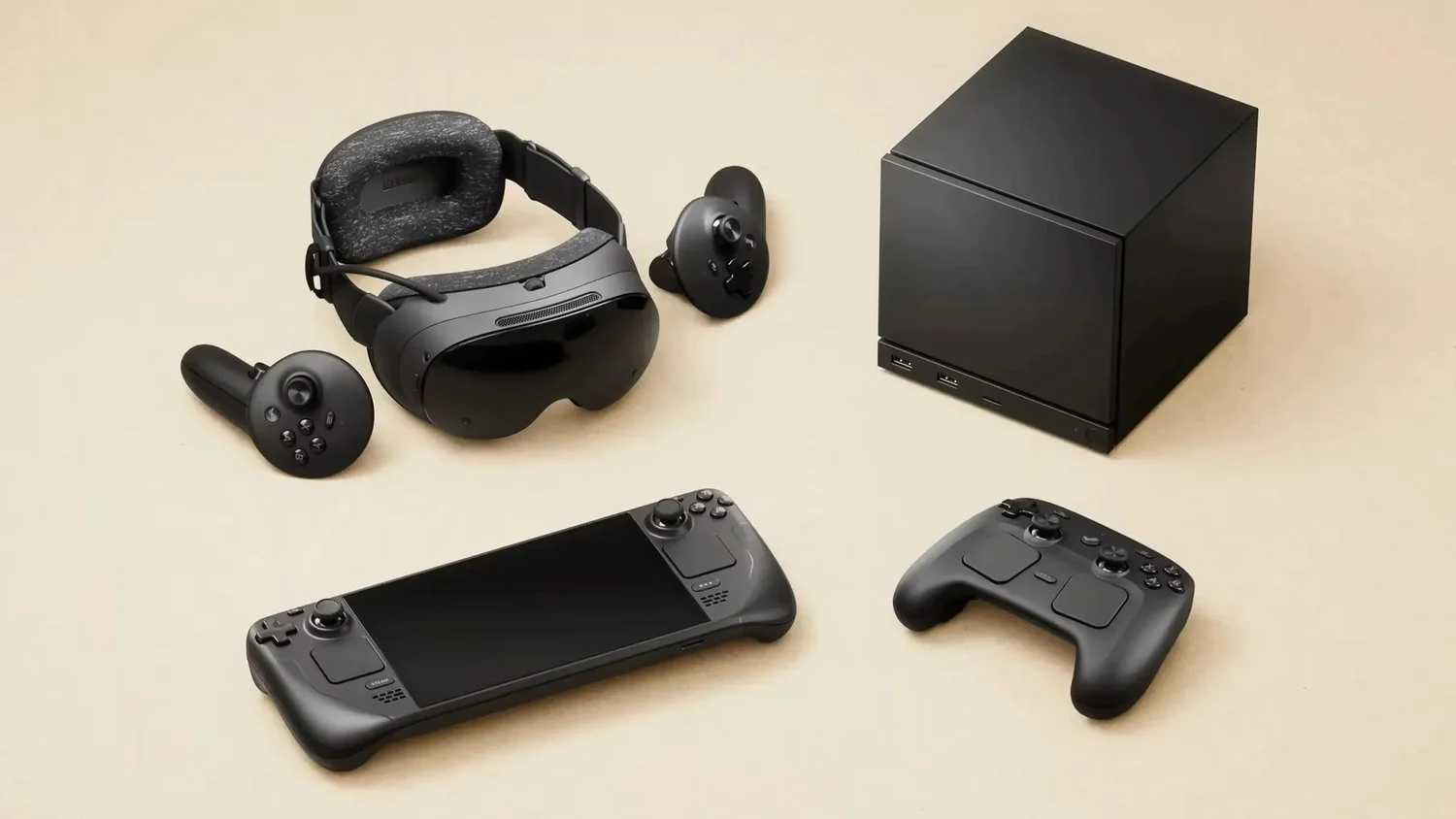
Previous speculation suggested that Valve (Valve ‘Lepton’ Leak) launching a premium VR headset without first-party software support seemed strategically incomplete. The intended direction now appears clearer.
A new listing has surfaced on SteamDB for something called “Lepton.” Data mining reveals this to be an official compatibility layer enabling Android applications to run on Linux, built upon Waydroid technology.
Connecting this discovery to the recently announced Steam Frame reveals Valve’s strategy. Rather than developing exclusive VR content, they’re constructing infrastructure to access existing software ecosystems.
 Hideo Kojima Just Dropped The Roadmap For The Next 10 Years, And Yes, We Need To Talk About ‘OD’
 Table of Contents
The Missing Link
When Valve unveiled the Steam Frame last month, the hardware specifications impressed while the software approach raised questions.
The headset runs on a Snapdragon 8 Gen 3 processor, an ARM chip identical to those powering premium Android phones and competing standalone headsets. This created uncertainty about how SteamOS, a Linux-based system, would handle a library designed for x86 architecture.
Lepton provides the answer.
Where Proton enables Windows games on Steam Deck, Lepton will enable Android games on Steam Frame.
The approach balances cleverness with practicality. Valve bypasses the need to fund expensive VR exclusives by ensuring the extensive Quest library, built on Android, can be sideloaded or ported to the Frame with minimal friction.
 Marathon’s Art Director Just Quit Bungie, And The Timing Is… Interesting
 The “No Games” Solution
This context illuminates the definitive statement against new Valve VR titles.
The calculation becomes straightforward: rather than investing years developing an Alyx sequel, Valve can facilitate direct installation of Beat Saber, VRChat, and Gorilla Tag from existing APKs.
Integrating Lepton into SteamOS effectively creates universal VR software compatibility. Users gain high-fidelity PC streaming through the new Wi-Fi 6E puck alongside standalone access to the entire Android VR ecosystem.
This transforms the Steam Frame from a specialized streaming device into a genuine Meta Quest competitor, achieved without Valve constructing a mobile ecosystem independently.
 New Marathon Leaks: The Vibes Are Immaculate, But The Robots Are Brain-Dead
 The “Steam Phone” Nightmare
Speculation about a potential “Steam Phone” has circulated, though broader implications deserve consideration.
Android app compatibility introduces potential quality control challenges. Steam already contends with low-effort releases. The prospect of gacha games, advertisement-heavy clickers, and poorly optimized mobile ports flooding discovery feeds presents legitimate concerns.
However, native access to Discord, Spotify, and Firefox on Steam Frame without workarounds offers meaningful convenience that may justify tolerating some lower-quality entries.
Valve has addressed a hardware limitation through software innovation. The Steam Frame now possesses a substantial library, though not one originating from Steam itself.
 Breaking : Arc Raiders Finally Kills the NVIDIA Filter Exploit—And the Community Is Losing Its Mind
 FAQ
What is the “Valve Lepton leak”?
The “Valve Lepton leak” refers to internal information suggesting Valve is developing a framework, potentially for their rumored Steam Frame device, that enables Android compatibility or integration alongside their SteamOS environment.
How does Android integration benefit the Steam Frame?
Android integration would significantly expand the Steam Frame’s utility beyond PC gaming, offering access to the Google Play Store, Android apps for productivity and entertainment, and overall greater versatility as a mobile computing device.
Will the Steam Frame run SteamOS and Android simultaneously?
While the exact implementation remains unconfirmed, the leak suggests either a dual-boot capability or a deeply integrated Android subsystem that allows users to access both gaming and Android functionalities seamlessly.
Could this make the Steam Frame a competitor to tablets and smartphones?
Yes, by offering robust gaming performance combined with the vast functionality of the Android ecosystem, the Steam Frame could position itself as a compelling alternative to high-end tablets and even some smartphones for users seeking a versatile all-in-one device.
Why is this leak considered a “saving grace” for the Steam Frame?
Without broader utility, a dedicated gaming handheld might be seen as a niche device. The potential for Android integration suggested by the Lepton leak could prevent the Steam Frame from being confined to just gaming, making it a much more appealing and versatile product for a wider audience.
 Naughty Dog Is Back To Mandating Crunch, And They Gave Employees A ‘Suffering’ Coin To Prove It
 The Future of Portable Gaming is Versatility
The “Lepton” leak feels less like a mere rumor and more like a sign of Valve‘s ambitious vision for the Steam Frame. By exploring the integration of Android, Valve isn’t just building another gaming handheld; they’re crafting a truly converged device that could redefine what we expect from portable entertainment and computing. This move acknowledges the real-world desire for devices that adapt to our diverse needs, rather than forcing us into single-purpose silos.
If executed skillfully, the Steam Frame, empowered by the flexibility hinted at in the valve lepton leak steam frame android revelation, will be far from a paperweight. It will be a powerful, dynamic platform that offers the best of PC gaming and the expansive utility of the Android ecosystem, all in the palm of your hand. This is an exciting prospect for anyone eager to see the boundaries of portable technology pushed once again, promising a future where our devices are as versatile as our digital lives demand.
 Rainbow Six Siege Hacked: Billions in R6 Credits Flood Accounts